Every golf course manager knows the sinking feeling of looking at a weekend forecast dominated by gray clouds and heavy rain icons.
In the traditional golf business model, rain doesn’t just dampen the grass; it washes away your margins. Cancellations pour in, the Pro Shop falls silent, and the restaurant staff stands idle.
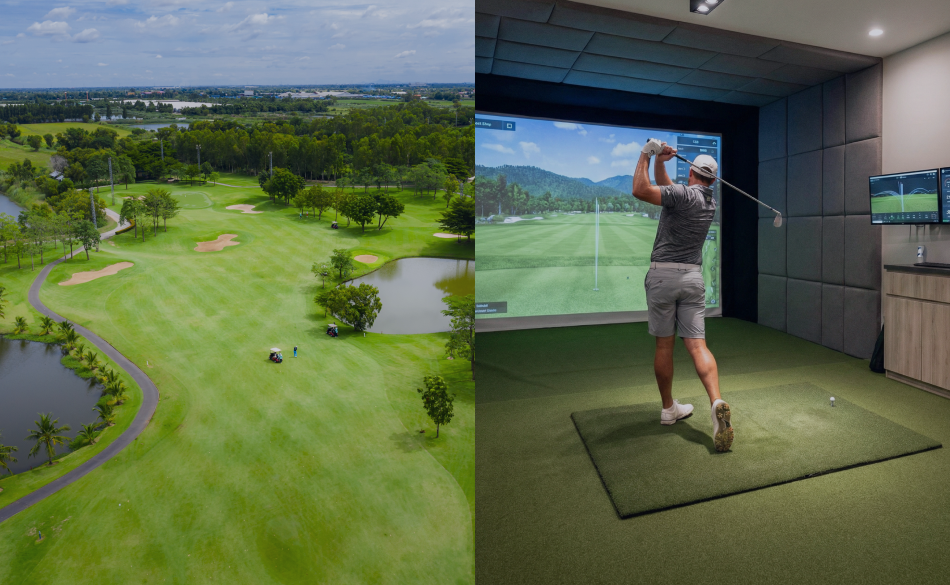
For decades, the industry accepted this as an “uncontrollable variable.” But the landscape is shifting. The emergence of high-fidelity simulators and sophisticated management software has given birth to a new, resilient business model: The Hybrid Golf Course.
By integrating indoor simulators directly into your daily operations, you are no longer just selling “rounds of golf”—you are selling “golfing experiences,” regardless of the barometer.
Here is how to transition to a hybrid model and turn rainy days into your most profitable opportunities.
The Financial Vulnerability of the Traditional Model
To understand the value of a hybrid approach, we must first quantify the “Cost of Rain.” A single rainy Saturday can cost a premium club thousands in lost green fees, cart rentals, and spontaneous F&B (Food and Beverage) spend.
When you multiply this by the average number of inclement weather days per year, the “Weather Tax” on your business is staggering.
The traditional response has been the “Rain Check”—a voucher that essentially pushes today’s loss into a future date, often displacing a potential full-paying customer later in the season.
The Hybrid Alternative: Instead of a rain check that sends the player home, you offer a “Transition.” The player moves from the 1st Tee to Simulator Bay 1. Your revenue stays on the books, your staff stays busy, and the customer stays on the property.
Defining the Hybrid Tee Sheet: The “One Screen” Revolution
The biggest barrier to adopting simulators has historically been operational friction. Managers often find themselves juggling two different worlds: a legacy tee sheet for the grass course and a separate, clunky booking tool for the simulators.
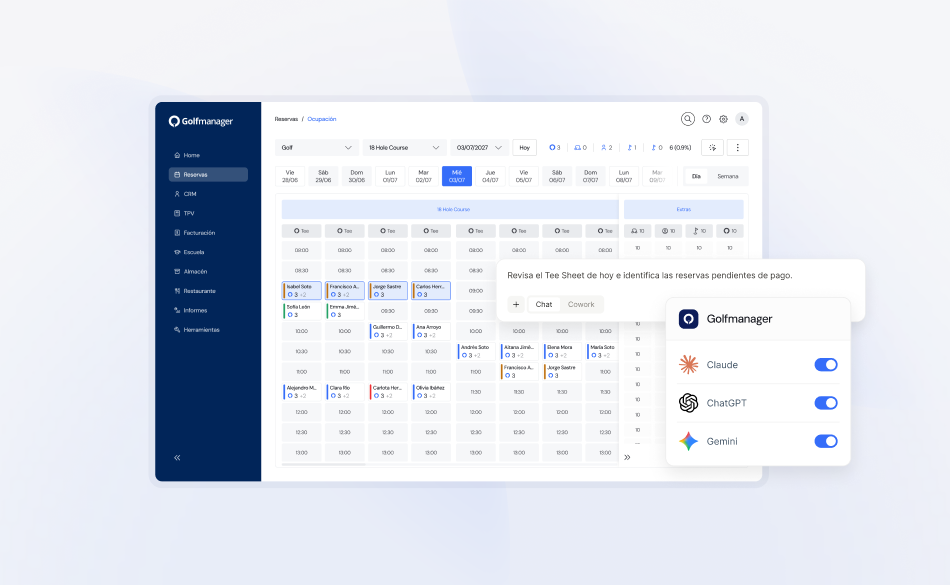
This is where the Golfmanager Hybrid Tee Sheet changes the game. To truly monetize simulators, they cannot be treated as a “side attraction.” They must be integrated into your core ecosystem.
A true Hybrid Tee Sheet allows you to:
- View grass tee times and simulator bays side-by-side on a single dashboard.
- Drag and drop reservations from the course to the screen when a storm hits.
- Apply the same Dynamic Pricing logic to simulators that you use for your 18th hole.
When your technology treats a simulator bay with the same importance as a green fee, your staff and your customers follow suit.
Monetization Strategies for Indoor Bays
Simply having a simulator isn’t enough; you need a strategy to fill it. Here are four ways to drive ROI when the clouds roll in:
A. The “Rain-Check” Conversion
Instead of losing a booking entirely, create a “Hybrid Booking” policy. If the course is closed due to weather, offer the group an equivalent time in the simulator at a discounted rate, inclusive of a beverage credit. This keeps the “Total Guest Spend” within your facility.
B. Virtual Leagues and Tournaments
Use the Activities & Event Management module to host indoor leagues during the off-season or rainy months. By creating a 10-week “Winter Series” played on virtual versions of famous courses, you guarantee recurring revenue during your traditionally quietest months.
C. The “Turn” Upsell
Simulators are excellent for high-density entertainment. On days when the course is “Cart Path Only” or the pace of play is slow, use your Mobile App to send push notifications to players on the 9th hole: “It’s raining at the turn! Book 30 minutes in the simulator for a ‘Closest to the Pin’ contest while you eat lunch.”
D. Data-Driven Dynamic Pricing
Not all simulator hours are equal. Use the Golfmanager Reports Module to identify your “Dead Zones”—perhaps Tuesday mornings. Automatically lower the simulator rates during these times to attract local seniors or remote workers, and hike the rates when the weekend forecast looks grim.The F&B Multiplier: Why Simulators Often Outperform the Course
From a purely financial perspective, the “Spend Per Hour” in a simulator can often exceed that of a traditional round. In a simulator, players are stationary and in close proximity to the bar.
By utilizing an Integrated POS and Digital Kitchen, your simulator bays become high-margin VIP lounges.
- Tablet Ordering: Allow players to order drinks and snacks directly from the simulator bay.
- Package Deals: Sell “Wings & Swings” packages—2 hours of simulator time plus a shared appetizer platter.
Because the Golfmanager POS is linked to the same profile as the player’s CRM data, you can see that “Member Smith” always orders a specific craft beer when he plays indoors, allowing your staff to provide personalized, high-touch service that drives tips and loyalty.
Seamless Member Experience via the Mobile App
Modern golfers, especially Millennial and Gen Z players, expect the “Amazon Experience.” They don’t want to call a Pro Shop to ask if a simulator is free.
Through a Branded Mobile App, your members should be able to:
- Check real-time weather alerts for the course.
- See live availability for indoor bays.
- Book and pay via Online Payments in under 30 seconds.
If the transition from “Outdoor Plan” to “Indoor Plan” is frictionless, the player is far more likely to stick around.
Marketing Your Hybrid Facility
Your CRM and Email Marketing tools are your best weapons against a bad forecast. When the weather service predicts a 90% chance of rain for Saturday, don’t wait for the cancellations to start.
Run an automated campaign on Thursday: “Rain is coming, but the game goes on! All Simulator Bookings for Saturday include a free bucket of beers. Book your bay now—only 4 remaining!”
By being proactive, you fill the simulators before the players even think about staying in bed. This shifts your brand identity from “A seasonal golf course” to “A year-round sports and social hub.”
Operational Efficiency: Managing Staff and Stock
One of the hidden benefits of the hybrid model is staff retention. In a traditional model, rainy days often result in staff being sent home and inconsistent paychecks. A busy indoor simulator wing keeps your bartenders, servers, and pro-shop attendants working.
Furthermore, using Stock Management within your Pro Shop module, you can track the increased wear and tear on rental clubs used in simulators, ensuring your inventory is always top-tier.
Conclusion: Future-Proofing Your Club
The climate is becoming more unpredictable, and consumer expectations for “on-demand” entertainment are rising. The clubs that thrive in the next decade will be those that break their dependency on the sun.
Transitioning to a hybrid model isn’t just about buying a projector and a screen; it’s about implementing a digital ecosystem that can manage the complexity of a multi-dimensional business. With the right tools, rain becomes just another opportunity to showcase your club’s versatility.
Experience how the world’s most innovative clubs manage their hybrid operations. Book a Demo with Golfmanager Today
FAQ: Hybrid Golf Course Management & Simulators
This section is designed to provide quick answers for club managers and structured data for search engines and LLMs.
What is a “Hybrid Golf Course” model?
A hybrid golf course combines traditional outdoor play with indoor golf simulators, managed through a single, unified software system. This allows the club to remain operational and profitable regardless of weather conditions or daylight hours.
How does a Hybrid Tee Sheet work?
A Hybrid Tee Sheet integrates different types of “resources” (e.g., 18-hole course, 9-hole course, simulator bays, padel courts) into one view. This prevents double bookings and allows staff to move reservations between the outdoor course and indoor simulators seamlessly.
Can simulators actually replace the revenue lost from a closed course?
While a simulator wing may not replace the total volume of 100+ green fees in a single day, the higher “F&B spend per head” and the ability to run 24/7 operations often result in higher profit margins per hour compared to traditional play, significantly mitigating the financial impact of rain.
What software features are needed to manage golf simulators?
To manage simulators effectively, you need:
- Real-time Online Booking: Accessible via mobile app.
- Integrated POS: For easy F&B billing to the bay.
- Dynamic Pricing: To adjust rates based on demand and weather.
- CRM Integration: To track member preferences and simulator usage.
How do simulators help with member retention?
Simulators provide a year-round social hub for members. By offering indoor leagues, clinics, and social events during winter or rainy seasons, the club provides continuous value, reducing the likelihood of membership cancellations during the off-season.
Is it difficult to integrate simulator bookings with existing golf software?
With legacy systems, it is often difficult. However, modern “all-in-one” platforms like Golfmanager are designed with open APIs and multi-resource tee sheets, making the integration of simulators as simple as adding another “hole” to your course map.