Padel is no longer a niche curiosity next to the 18th green. Nearly 5,000 new padel clubs opened worldwide in 2025 alone. The global total now stands above 20,900 clubs and 58,300 courts, six times more than in 2016. An estimated 19.4 million people now play the sport. For golf clubs sitting on underused land, with a membership base that already pays for leisure, that growth is hard to ignore.
This isn’t the same conversation as the broader hybrid multi-sport trend. Padel brings a specific business case golf clubs can act on now: high player retention, strong space efficiency, and a demographic that overlaps with the existing golf membership without duplicating it.
Here’s how clubs are approaching it, and what separates a court that sits idle from one that becomes a real second revenue line.
Why Padel Fits the Golf Club Business Model Specifically
Three characteristics make padel a particularly good match for golf facilities, rather than just another add-on sport.
- Space efficiency changes the math. A padel court fits in a fraction of the space a golf hole needs. Up to three padel courts can be built in the same area as a single tennis court, roughly tripling the rental income that space can generate. For a club with an unused corner of land, or space freed up by a course redesign, that’s a very different return on land than expanding golf infrastructure.
- Retention numbers rival golf’s own stickiness. Padel has a return rate of around 92%: most people who try it come back. Researchers link this to how accessible and social the sport is. That’s valuable for a club trying to build a second community, not just sell one-off court time.
- The demographic overlap is real, but not total. Padel attracts couples, younger members, and corporate groups who may never pick up a golf club. It also appeals to existing golf members who want a faster, more social option on a Tuesday evening. Adult members make up roughly 42% of the padel player base, and corporate groups increasingly drive weekday bookings. That weekday corporate demand fills exactly the gap golf itself struggles with.
Where the Real Revenue Actually Comes From
The instinct is to treat a new padel court like a rental asset: book it, charge by the hour, done. The data suggests that’s leaving money on the table.
- Court-hour value beats court count. Industry analysts frame padel economics around what’s known as the court-hour engine, rather than simply how many courts a facility owns. A smaller club with strong booking rates, good lighting, and active programming can outperform a larger facility with poor utilization. The operations around the court matter more than the court itself.
- Programming turns rental into recurring revenue. Open matches, academies, leagues, coaching, and corporate events all improve monetization beyond simple court bookings. A Tuesday night league or a beginner clinic turns one court into several predictable revenue streams, instead of one unpredictable hourly rental.
- The holistic model is becoming standard, not the exception. Nine out of ten high-performance padel clubs now pair the court with amenities like a recovery area, social space, or dining. A padel court works best as part of a broader club experience, not a standalone facility bolted onto the car park.
For a golf club, this is a natural fit. You already run leagues, lessons, events, and a restaurant. Padel doesn’t need a new operating philosophy. It needs the same one, applied to a second sport.
Running Two Sports Without Two Disconnected Systems
The most common mistake clubs make with padel is running it as a side project: a separate booking app, a different payment process, a spreadsheet the pro shop never sees.
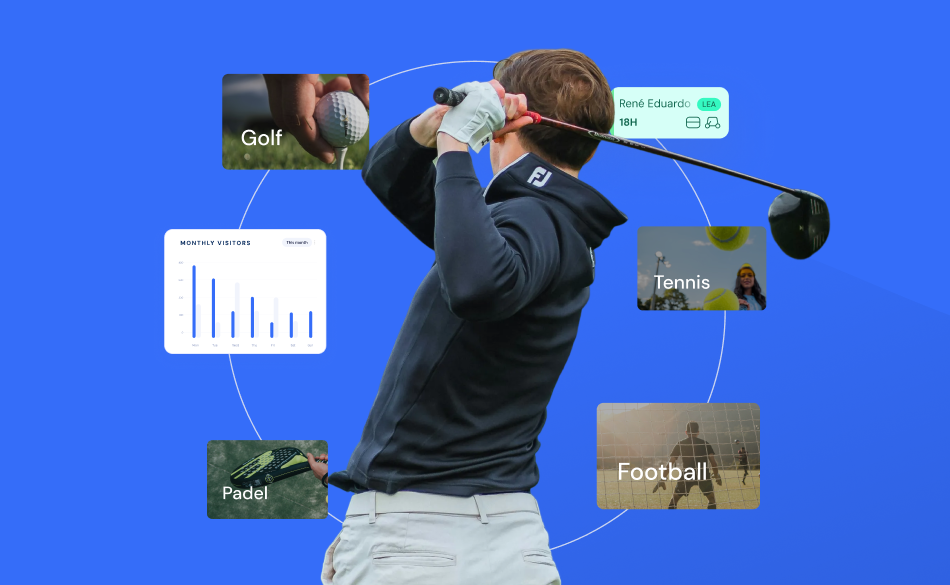
Golfmanager’s Other Sports module is built to avoid that split. Padel, tennis, or any additional sport gets configured inside the same platform already running your tee sheet. One customer record, one booking calendar, one point of sale, instead of two businesses awkwardly sharing a car park.
- One booking engine for every sport members play. Golfers and padel players reserve through the same online booking system, whether that’s a tee time or a court slot. Staff aren’t toggling between two platforms to answer a phone call, and members aren’t downloading a second app to book a court.
- Court-specific rules without a separate setup. Match duration, player numbers, and availability windows are configured independently for padel, while golf tee times keep their own logic. Different sports, different rules, same system underneath.
- Cross-visibility drives cross-selling. When padel and golf bookings sit in the same customer record, staff and marketing campaigns can spot golf members who’ve never tried padel, or padel players who’ve never booked a tee time, and target each group directly.
Pricing Padel the Way You Already Price Golf
Padel courts face the same challenge as tee times: fixed inventory, fluctuating demand, and a real cost to every hour that goes unbooked. Golf clubs already understand this problem. The mistake is not applying the same discipline to the new sport.
Golfmanager’s Dynamic Pricing module extends the pricing logic already used for tee sheets to padel courts, without building a second strategy from scratch.
- Peak and off-peak rates built around padel’s own demand curve. Padel’s busy hours often skew toward evenings and weekends, a different pattern from golf’s early-morning peak. Pricing needs its own logic, not golf’s schedule by default.
- Bundled and cross-sport rates encourage trial. Offer golf members a discounted introductory rate for padel, or a combined membership tier that covers both sports. This targets golfers who’ve never tried padel but already belong to a club that now offers it.
- Member versus guest pricing carries over automatically. The same tiered structure that separates member and public rates on the golf side applies to padel, so there’s no second rate table to maintain by hand.
Demand data informs whether to add a second court. Reporting tools that already track tee sheet utilization can show padel occupancy by day and hour. That gives a data-backed answer to a question every club eventually asks: is it time to build another court.
Turning One Community Into Two Active Ones
A padel court that only ever serves padel players is a missed opportunity. The value compounds once the two communities discover each other.
Feature padel alongside golf in member communications and the CRM, so a member’s full activity, not just their golf history, shapes the offers and events they see.
Run mixed formats too: a golf-and-padel evening, a corporate day combining nine holes with an afternoon padel tournament, or a family membership covering both sports. None of this needs new infrastructure once both sports live in the same system. It just requires marketing them together, instead of running two clubs under one roof.
Getting Started Without Overbuilding
Clubs that succeed with padel tend to start smaller than instinct suggests. One court with strong programming and clear pricing outperforms three courts nobody scheduled anything around. Track early utilization data before committing to a second court.
Build at least one recurring format, a league or a beginner course, before the courts even open. And keep booking, pricing, and customer data in the same system already managing golf. That way padel adds a revenue line, not a second business to run from scratch.
The clubs treating padel as a genuine extension of the business, not a side bet, are the ones capturing the global growth the sport is generating.
FAQs: How Can Padel be an Additional Revenue Stream?
How big is the padel industry right now?
Nearly 5,000 new padel clubs and about 8,000 new courts opened worldwide in 2025 alone. The global total now exceeds 20,900 clubs, 58,300 courts, and an estimated 19.4 million players.
Why are golf clubs specifically well-positioned to add padel?
Golf clubs often have underused land and a membership base that already pays for leisure. They also have operational experience running leagues, lessons, and events, all of which transfers directly to a padel program.
How much more revenue can a padel court generate per square meter versus other options?
Up to three padel courts can fit in the space of one tennis court, so the same land area can generate roughly triple the rental potential.
What retention rate does padel typically see among new players?
Padel has a return rate of around 92%. Most first-time players come back, a pattern linked to the sport’s accessibility and social format.
What actually drives padel court revenue beyond hourly rental?
Leagues, academies, coaching, corporate events, and membership packages consistently outperform simple hourly rental. Programming converts one court into several recurring revenue streams.
Which Golfmanager modules support running padel alongside golf?
The Other Sports module configures padel or tennis inside the same platform as the golf tee sheet. Online Bookings unifies reservations for both sports in one system. Dynamic Pricing applies the same demand-based logic used for tee times to padel court availability.
Explore Golfmanager’s Other Sports module or schedule a demo to see how golf and padel can run on a single platform.