
For decades, the golf industry operated within its own bubble. A golf club was, essentially, a place where players booked their tee times, played their 18 holes, and wrapped up the day at the 19th hole. But that model has changed.
The 21st-century country club is no longer a single-sport venue. It has evolved into a dynamic environment that blends golf, racquet sports, fitness, and social experiences. In this new landscape, the most competitive clubs are no longer just selling green fees; they are building comprehensive sports ecosystems designed to attract a wide range of users year-round.
The key is understanding that this shift is not a passing trend, but a long-term business strategy. And more importantly, it cannot be sustained without a technological foundation capable of supporting it.
From The Tee Sheet To Multi-Resource Management
For years, the operational backbone of any golf club was the tee sheet, focused exclusively on managing on-course play. Today, that approach is no longer sufficient.
Modern clubs must simultaneously manage tee times, padel and tennis courts, coaching sessions, indoor simulators, and even wellness services. This shift requires moving from a golf-centric mindset to a holistic resource management model.
When software is not built for this reality, problems quickly arise: disconnected systems, duplicate bookings, operational errors, and most critically, lost revenue opportunities.
The Multi-Resource Tee Sheet: A Single View Of The Entire Club
One of the most significant advancements in modern club management is the concept of the multi-resource tee sheet. Instead of relying on separate systems, clubs can now oversee and manage all their assets from a single interface.
This includes everything from tee times to padel courts or simulator bays. The operational difference is substantial. Staff is no longer working with fragmented data but with a real-time, unified view of occupancy across the entire facility.
This approach not only improves efficiency but also unlocks new revenue opportunities. For instance, it allows staff to identify gaps between bookings and proactively suggest additional services, increasing average spend per customer.
It also simplifies internal processes: less training, fewer errors, and a single, reliable source of truth for the entire team.
The Modern Player: More Social, More Flexible
Player behavior has evolved. Traditional golf—often requiring several hours—now coexists with faster, more social sports such as padel or pickleball.
In this context, features like “Join A Game” have become essential. This functionality allows clubs to automatically fill open slots in matches by connecting players with similar interests and skill levels.
The result is higher occupancy and a more dynamic user experience. The club is no longer just a place to play—it becomes an active, engaged community.
The Hybrid Member: Redefining Membership Models
The multi-sport model is also reshaping what it means to be a member. It is no longer just about the regular golfer, but about a user who engages with multiple activities within the club.
This opens the door to more flexible and creative membership structures, where access to different sports is bundled into a single value proposition. However, this added complexity requires a system capable of managing permissions, access rights, and usage conditions in real time.
When the technology works seamlessly, the member experience improves significantly. Everything flows naturally—from booking to accessing each service.
True Profitability: Maximizing Revenue Per Square Meter
One of the long-standing challenges of traditional golf is seasonality and uneven space utilization. A golf course occupies vast areas, yet demand is not always consistent.
The hybrid model changes this dynamic. It enables clubs to diversify how space is used and generate revenue more consistently throughout the year. With real-time reporting tools, operators can identify which areas deliver the highest returns and adjust their strategy accordingly.
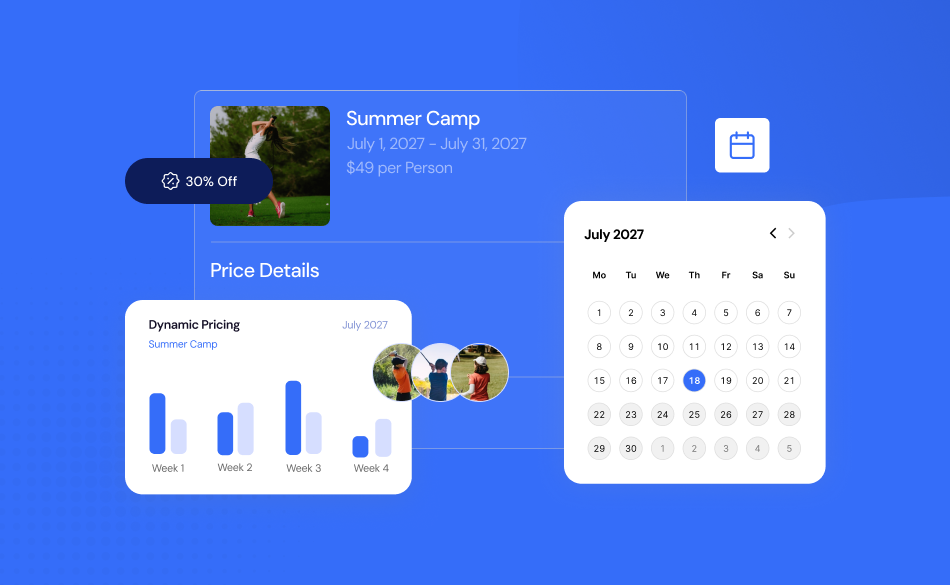
Additionally, applying dynamic pricing helps balance demand across different time slots and activities, ensuring the facility remains active from early morning through late evening.
Beyond The Green Fee: Understanding Total Customer Value
In a multi-sport environment, a customer’s value extends far beyond the green fee. It includes everything they consume within the club—from food and beverage to coaching sessions or simulator use.
When systems are fully integrated, every interaction is tied to a single customer profile. This provides deeper insights into user behavior and enables more effective, personalized marketing strategies.
As a result, clubs move from managing isolated transactions to building long-term customer relationships.
From Golf Club To Sports Destination
The industry is evolving toward a model where golf is just one component of a broader offering.
Clubs that embrace the multi-sport approach not only diversify their revenue streams but also position themselves as leading destinations for sport and leisure.
However, this transformation is only possible with technology capable of handling the operational complexity it entails.
Golfmanager was built with this in mind: a platform designed to manage multiple resources, sports, and business models within a single system.
Interested in learning more? Book a demo with our team through the following link.
FAQ: Hybrid Multi-Sport Management
What Is A Multi-Resource Scheduler?
It is a planning tool that allows clubs to manage different assets—such as tee times, courts, or simulator bays—within a single interface, streamlining operations and control.
Can Different Pricing Rules Be Applied To Each Sport?
Yes. Advanced systems allow clubs to define specific pricing structures tailored to each type of resource, adapting to demand and user behavior.
Does The Multi-Sport Model Attract Younger Audiences?
Yes. Faster-paced, more social sports tend to appeal to younger demographics, offering a lower barrier to entry and shorter time commitments.
Can Profitability Be Analyzed By Sport?
Absolutely. Reporting tools enable clubs to segment revenue and clearly understand the performance of each area within the business.